How to Choose the Best Pico Laser Treatment in Singapore

Choosing the best Pico laser treatment means evaluating the technology version used, the provider's clinical credentials, treatment customisation options, and post-care support. Look for clinics with certified doctors, proven results across skin tones, and transparent pricing. In Singapore, where aesthetic medicine is regulated by the Ministry of Health, these factors directly affect both your safety and your outcome.
If you are comparing providers for best Pico laser treatment in Singapore, you are already asking the right question. Not all Pico lasers are the same. Not all clinics deliver the same standard of care. This guide walks you through exactly what to look for — step by step — so you make a confident, informed decision.
What Is Pico Laser and Why Does the Provider Matter?
Pico laser delivers ultra-short pulses of energy — measured in picoseconds — to break down pigmentation, stimulate collagen, and resurface skin with minimal thermal damage. It is used to treat melasma, acne scars, enlarged pores, uneven skin tone, and tattoo removal.
The technology itself is effective. But the outcome depends heavily on who operates it, which device they use, and how well the treatment is tailored to your skin. Two clinics using "Pico laser" can produce very different results if one uses an older system or applies a one-size-fits-all protocol.
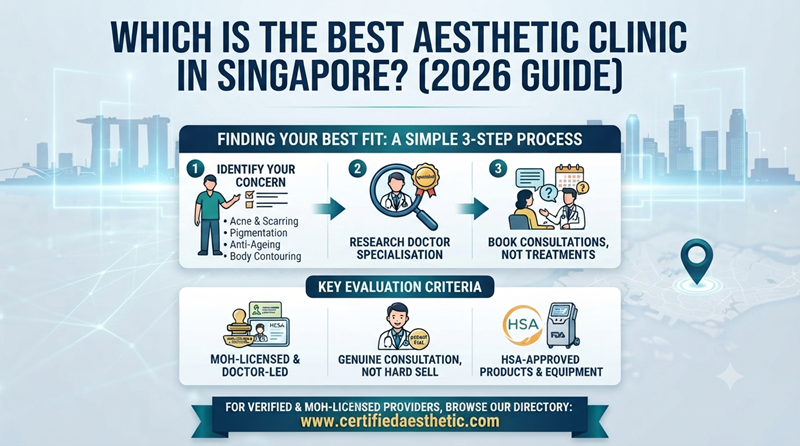
Step 1: Verify the Doctor's Qualifications and MOH Registration
In Singapore, aesthetic treatments involving lasers must be performed or directly supervised by a licensed medical doctor registered with the Singapore Medical Council (SMC). This is not optional — it is a regulatory requirement under the Ministry of Health's guidelines for aesthetic practices.
Before booking, confirm that the doctor:
Is registered with the SMC
Has specific training in laser and aesthetic medicine
Is present during your treatment — not just for the consultation
Clinics that allow unqualified staff to perform laser procedures independently are operating outside MOH guidelines. This is a red flag you should not overlook.
Step 2: Ask About the Specific Pico Laser Device
Not every device marketed as a "Pico laser" performs equally. The key differences lie in pulse duration, wavelength options, spot size flexibility, and whether the system includes a diffractive lens array (used for collagen stimulation and skin rejuvenation).
What to Ask the Clinic
When you speak to the clinic, ask these direct questions:
What brand and model is the Pico laser device?
Does it offer multiple wavelengths (e.g., 532nm, 1064nm, 595nm, 730nm)?
Does it include a focus lens array for skin texture treatment?
How often is the device serviced and calibrated?
Reputable devices used in Singapore include the PicoSure, PicoWay, and Discovery PICO. Clinics confident in their equipment will answer these questions without hesitation.
Step 3: Assess How the Clinic Evaluates Your Skin
A proper consultation should include a detailed skin assessment — not just a visual check, but ideally a VISIA or similar skin analysis tool that identifies pigmentation depth, pore size, UV damage, and skin texture. This data directly informs the treatment settings.
Be cautious of clinics that:
Recommend a treatment package before even examining your skin
Offer the same protocol to every patient regardless of skin type or concern
Skip asking about your history of keloids, active skin conditions, or medications
Your Fitzpatrick skin type — particularly relevant for Asian skin tones common in Singapore — affects which wavelength, fluence, and pulse rate settings are safest and most effective for you.
Step 4: Compare Clinics on Treatment Transparency
What Transparent Pricing Looks Like
Pico laser treatment in Singapore typically ranges from SGD $200 to $600 per session depending on the area treated, the device used, and the clinic's positioning. Clinics operating in the top aesthetic clinic segment may charge more — but that should reflect clinical expertise and technology, not just branding.
A transparent clinic will:
Provide a written breakdown of what is included per session
Explain how many sessions are realistically needed for your concern
Not pressure you into large upfront packages before a trial session
Disclose potential side effects and downtime clearly
If the pricing feels deliberately vague or you are being upsold aggressively at the consultation, that is information about how the clinic operates.
Step 5: Review Before-and-After Results for Your Specific Concern
Before-and-after photos are standard, but look critically. Are the results shown relevant to your concern — melasma, acne scars, tattoo removal, or skin brightening? Are the patients shown of a similar skin tone to yours?
Asian skin tones are more prone to post-inflammatory hyperpigmentation (PIH) after laser treatments if the settings are not calibrated carefully. Ask specifically: "Do you have results for patients with my skin type and concern?"
Authentic results should show gradual, realistic improvement — not dramatic transformations that suggest heavy retouching.
Step 6: Evaluate After-Care Support and Follow-Up Protocols
The quality of post-treatment care is often what separates a good experience from a great one. Pico laser treatments — especially for melasma or acne scarring — require consistent follow-up to monitor skin response and adjust protocols accordingly.
Look for clinics that offer:
A documented post-treatment care plan with product recommendations
Scheduled follow-up consultations between sessions
A clear process if you experience unexpected redness, swelling, or pigmentation flare
Clinics that disappear after your session is paid for are not invested in your long-term results.
Pico Laser Provider Comparison: What to Look For
Criteria | Strong Provider | Weak Provider
|
Doctor credentials | SMC-registered, laser-trained doctor present | Treatments delegated to unqualified staff |
Device quality | Named, certified device with multiple wavelengths | Generic or unspecified "Pico" system |
Skin assessment | VISIA analysis, personalised settings | Visual check, standard protocol for all |
Pricing transparency | Clear breakdown, no pressure packages | Vague pricing, aggressive upselling |
After-care | Written plan, scheduled follow-ups | No follow-up after payment |
Is Pico Laser Safe for All Skin Types in Singapore?
Yes — when performed correctly. Pico laser is widely considered one of the safest laser options for Asian skin because its ultra-short pulses generate less heat, reducing the risk of thermal damage and PIH. However, safety is only guaranteed when the settings are calibrated for your specific Fitzpatrick skin type.
Patients with active skin infections, recent sun exposure, certain autoimmune conditions, or those on photosensitising medications may need to defer treatment. A qualified doctor should screen for all of these during consultation.
Where to Start Your Search for the Best Aesthetic Clinic in Singapore
Start with clinics that are upfront about their doctors, devices, and protocols. Read verified patient reviews on platforms like Google, Doctorxdentist, or the Singapore Medical Council's public register. Avoid making a decision based on promotional pricing alone — the cheapest session is not always the safest or most effective one.
When evaluating the best aesthetic clinic in Singapore for Pico laser, prioritise clinical credibility over aesthetics of the clinic space. A well-lit reception area means nothing if the doctor-to-patient ratio is too high for proper personalised care.
Certified Aesthetic Clinic offers Pico laser treatments tailored to individual skin concerns, with qualified medical doctors overseeing every session. If you are ready to start with a consultation, visit the Certified Aesthetic Clinic homepage to learn more about their approach to safe, results-driven aesthetic care.
Frequently Asked Questions
How many Pico laser sessions do I need to see results in Singapore?
Most patients see noticeable improvement after 3 to 6 sessions, depending on the concern being treated. Pigmentation issues like melasma may require more sessions, while general skin brightening can show results sooner. Your doctor should set realistic expectations during the initial consultation.
Is Pico laser treatment painful?
Pico laser is generally well-tolerated. Most patients describe a mild snapping sensation during the procedure. Numbing cream is typically applied beforehand to minimise discomfort. Post-treatment, some redness and warmth are normal and usually resolve within a few hours to a day.
What is the difference between Pico laser and traditional Q-switched laser?
Pico laser delivers energy in picoseconds — significantly faster than Q-switched lasers, which operate in nanoseconds. This shorter pulse duration means less heat is generated, reducing the risk of skin damage. Pico laser is generally more effective for stubborn pigmentation and skin rejuvenation with lower downtime.
Can Pico laser treat melasma effectively on Asian skin?
Yes, Pico laser is one of the preferred treatments for melasma in Asian skin types. Its precision reduces the risk of post-inflammatory hyperpigmentation that can worsen melasma with other lasers. Results depend on correct settings, sun protection compliance, and combining treatment with appropriate topical skincare.
How do I verify if an aesthetic clinic in Singapore is legitimate?
Check that the clinic's doctors are registered with the Singapore Medical Council (SMC) via the public register at moh.gov.sg. Ensure the clinic complies with MOH's Aesthetic Practices Oversight Framework. Legitimate clinics will provide doctor credentials willingly and never allow unqualified personnel to perform laser treatments independently.
What should I avoid before and after a Pico laser session?
Avoid direct sun exposure, retinoids, and exfoliating acids for at least one week before treatment. After the session, skip active skincare ingredients, stay out of the sun, and apply SPF 50 daily. Follow your clinic's specific post-care instructions, as protocol may vary based on your skin type and the area treated.


Comments